GEOTECHNICAL ENGINEERING
OKLAHOMA CITY
HomeFoundationsShallow foundation design

Shallow Foundation Design for Oklahoma City Soils

Evidence-based design. Reliable delivery.

LEARN MORE

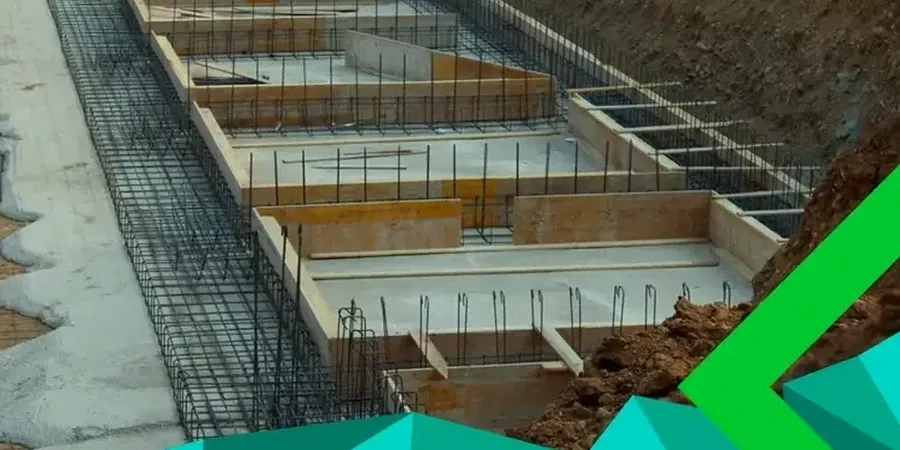
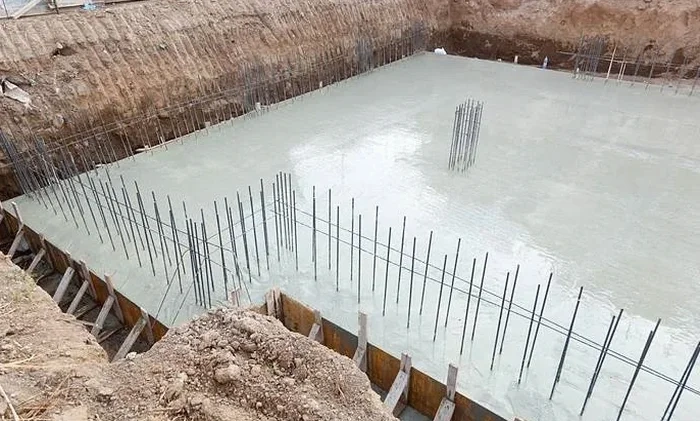
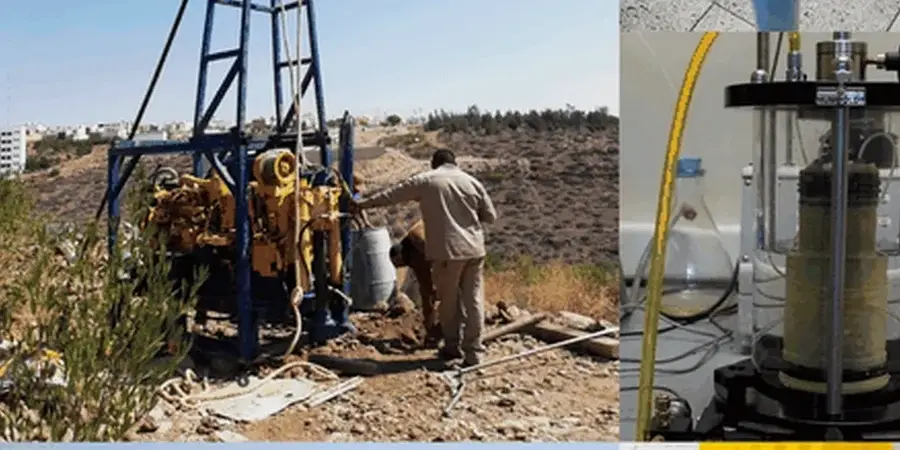
A foundation that works perfectly in the sandy soils of northwest Oklahoma City can fail in the deep, reactive clays of the city's east side just ten miles away. The difference lies in the shrink-swell potential of the local Permian-age formations, which demand a tailored shallow foundation design rather than a generic pad. Our team correlates historical boring logs from downtown OKC with site-specific Atterberg limits testing to define the active zone depth before a single footing is poured. In areas closer to the North Canadian River, where alluvial deposits mask the bedrock profile, we combine these index tests with a CPT sounding to verify bearing capacity assumptions without over-excavating. This is not a textbook exercise; it is a direct response to how Oklahoma City's geology behaves under seasonal moisture cycles.

In Oklahoma City's expansive clays, the most expensive shallow foundation is the one designed without a plasticity index.
Our service areas

Process and scope

In Oklahoma County, we frequently observe that the stiff crust present during a dry August job walk disappears entirely after a wet October, completely changing the subgrade modulus. A reliable shallow foundation design here must account for this seasonal variance, which is why we prioritize unsaturated soil mechanics rather than simplified saturated models. Our approach integrates laboratory consolidation data with field density checks to prevent differential movement.
  • Bearing capacity verification per IBC Section 1806 and ASCE 7 load combinations
  • Shrink-swell mitigation through moisture-conditioned select fill and deepened beam stems
  • Integration of grain-size analysis to identify problematic silt pockets in the subgrade
  • Construction-phase observation to confirm design assumptions during excavation
The result is a footing system that bridges the gap between geotechnical reality and structural economy, particularly in the commercial developments spreading north of the Kilpatrick Turnpike.
Shallow Foundation Design for Oklahoma City Soils
Technical reference — Oklahoma City

Local geotechnical context

A four-story medical office building near Lake Hefner started showing drywall cracks within eighteen months of completion. The original design assumed a uniform 2,500 psf bearing capacity, but the site straddled a transition zone between residual claystone and a pre-1960s trash fill that no boring had fully delineated. The shallow foundation design failed not because of structural overload, but because the differential stiffness under the mat allowed one wing to rotate while the other remained fixed. Repairing this required underpinning with helical piers and extensive interior restoration, costing the owner more than triple the original foundation budget. In Oklahoma City's patchwork of developed and redeveloped land, skipping a comprehensive subsurface exploration or ignoring the presence of non-engineered fill turns a cost-effective spread footing into a long-term liability that trades initial savings for continuous maintenance.

Need a geotechnical assessment?

Reply within 24h.

Email: contact@geotechnical-engineering.xyz

Applicable standards

ASCE 7-22 Minimum Design Loads and Associated Criteria for Buildings and Other Structures, IBC 2021 Section 1806 – Presumptive Load-Bearing Values of Soils, ASTM D4318 Standard Test Methods for Liquid Limit, Plastic Limit, and Plasticity Index of Soils, ASTM D2487 Standard Practice for Classification of Soils for Engineering Purposes (Unified Soil Classification System), ACI 336.2R Suggested Analysis and Design Procedures for Combined Footings and Mats

Technical parameters

ParameterTypical value
Allowable bearing pressure (stiff clay)2,000 to 3,500 psf
Minimum embedment depth30 inches (per frost depth + suction)
Active zone depth (shrink-swell)8 to 15 ft (typical in OKC metro)
Swelling pressure range (Portland cement-stabilized)2,000 to 5,000 psf (untreated)
Settlement tolerance (isolated footings)1 inch total / 0.75 inch differential
Required undercut in undocumented fillFull removal to natural ground or engineered fill

Common questions

Is a shallow foundation safe in Oklahoma City's clay soils, or do I always need a deep foundation?

A properly engineered shallow foundation is absolutely viable for most low to mid-rise structures in OKC. The key is recognizing that our local clays are expansive, not necessarily weak. We design with deepened beam stems, moisture-conditioned select fill, and often a capillary break to isolate the slab from the active zone. Deep foundations only become necessary when the structural loads are very high, when the site has thick undocumented fill, or when the active shrink-swell zone extends beyond an economically excavatable depth.

What does shallow foundation design typically cost for a commercial building in the Oklahoma City area?

For a standard commercial lot with a straightforward soil profile, a complete shallow foundation design package—including the geotechnical investigation, lab testing, engineering analysis, and stamped construction drawings—generally falls between US$2.140 and US$2.830. The final fee depends on the building footprint, the number of borings required to satisfy IBC 1803, and the complexity of any fill or variable strata encountered on site.

How do you handle the shrink-swell issue without using piers?

We control the moisture environment below the foundation. This starts with a thorough characterization of the active zone depth using Atterberg limits and suction profiles. Then we specify a non-expansive select fill blanket, deepened perimeter grade beams to bridge over the active zone, and positive drainage that directs surface water at least five feet away from the building line. In some cases we also prescribe chemically stabilized subgrade using lime or cement to reduce the plasticity index of the native clay. The goal is to keep the moisture content below the slab constant year-round, neutralizing the expansion potential.

Location and service area

We serve projects in Oklahoma City and surrounding areas.

View larger map