GEOTECHNICAL ENGINEERING
OKLAHOMA CITY
HomeGround improvementStone column design

Stone Column Design in Oklahoma City: Ground Improvement on Soft Soils

Evidence-based design. Reliable delivery.

LEARN MORE

Oklahoma City sits on the Permian-age Garber Sandstone and Hennessey Shale, but the real challenge for foundation engineers lies in the Quaternary alluvium along the North Canadian River floodplain. These soft, normally consolidated clays can extend 15 to 30 feet deep. Standard shallow footings often fail to meet the 1-inch total settlement criterion under these conditions. A CPT test provides continuous stratigraphy to identify the transition from fill to competent shale. Stone column design becomes the logical alternative when removal and replacement of compressible material exceeds 8 feet. The design process follows IBC Chapter 18 guidelines and ASCE 7 load combinations for the Oklahoma City seismic design category, typically B or C depending on site class.

A 25% replacement ratio in Oklahoma City’s alluvial clay can reduce post-construction settlement from over 3 inches to less than 0.75 inches.
Our service areas

Process and scope

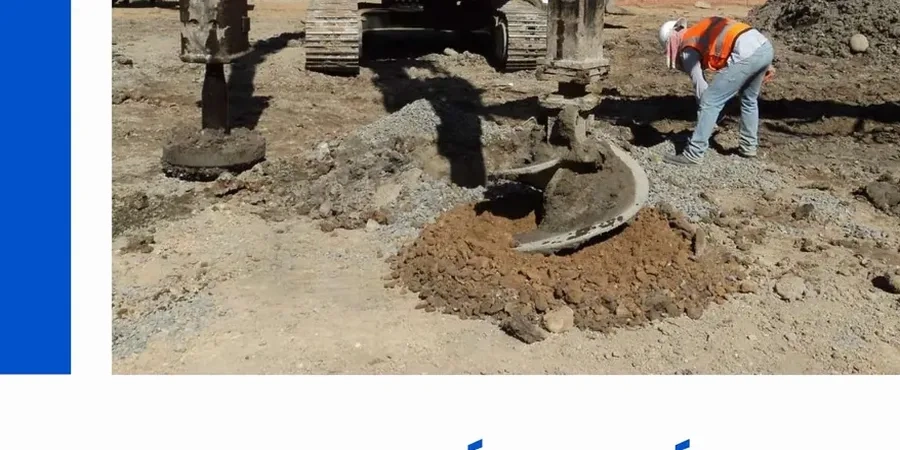
Local drillers report that the Red Bed clay layers weather rapidly when exposed to air, losing shear strength within hours. This behavior means a vibro-replacement installation sequence must be planned carefully. Stone column design in this context targets a replacement ratio between 20 and 35 percent. The granular column transfers overburden stress to the aggregate matrix, reducing excess pore pressure accumulation. For silty deposits near Lake Hefner, we incorporate a liquefaction assessment into the design because loose saturated silts are susceptible during distant seismic events from the Meers Fault. Column diameter typically ranges from 30 to 42 inches, installed by top-feed vibratory probe. The load-settlement response is modeled using Priebe’s method, validated by a full-scale plate load test on the composite ground. Key parameters include:
  • Internal friction angle of crushed stone: 40° to 42°
  • Replacement ratio (as): typically 0.25–0.35 for soft clay
  • Depth of improvement: 20–35 ft below grade
  • Modular ratio (stone/soil): 15–25 depending on stiffness of untreated matrix
  • Unit cell diameter: 6–8 ft triangular grid
Stone Column Design in Oklahoma City: Ground Improvement on Soft Soils
Technical reference — Oklahoma City

Local geotechnical context

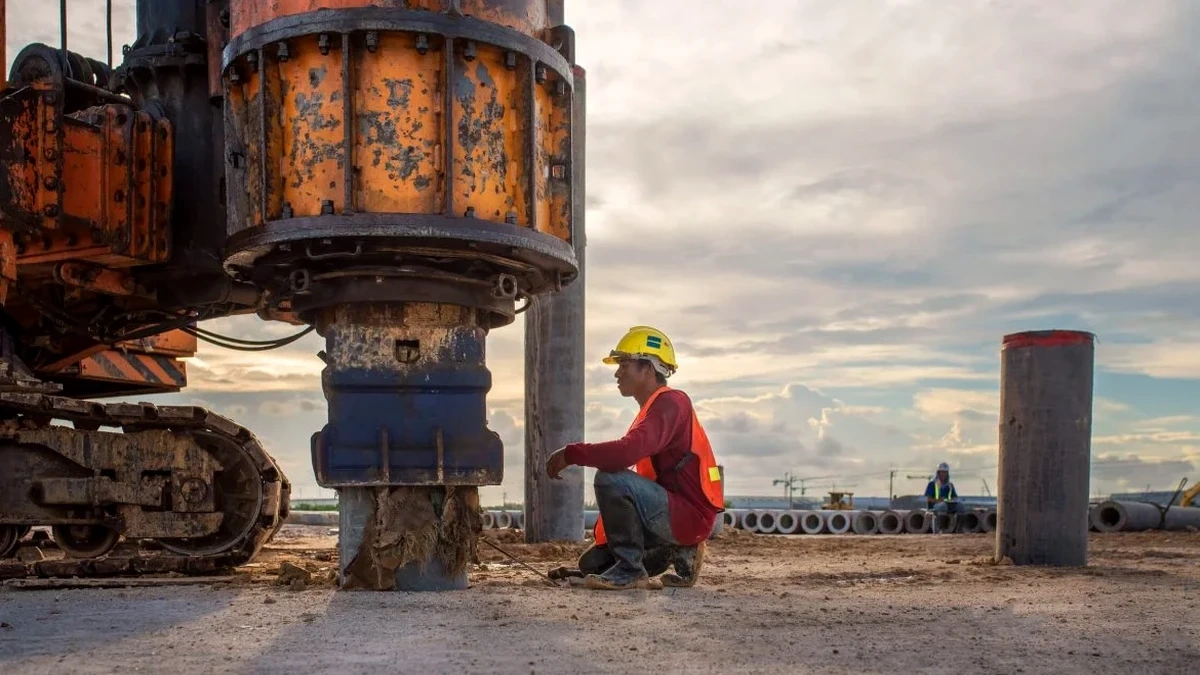
A crawler-mounted vibratory probe, typically 130 to 180 kW, is mobilized to the Oklahoma City site. The rig advances using water jetting and vibration to displace the soft clay laterally. The biggest risk during installation is the collapse of the hole wall before the stone backfill locks into place. This “necking” defect is common in quick clays with sensitivity above 4. The design mitigates this by specifying a bottom-feed method or a pre-drilled pilot hole through the stiff crust. Underground utilities in older districts like Heritage Hills East are another hazard. A private utility locate is mandatory before mobilizing the probe. Field quality control relies on real-time ammeter readings and post-installation modulus tests to confirm the column integrity through the full depth of the alluvial deposit.

Need a geotechnical assessment?

Reply within 24h.

Email: contact@geotechnical-engineering.xyz

Applicable standards

IBC Chapter 18: Soils and Foundations, ASCE 7-22: Minimum Design Loads for Buildings, ASTM D1586: Standard Penetration Test, ASTM D2487: Soil Classification

Technical parameters

ParameterTypical value
Column diameter (in)30 to 42
Typical depth (ft)20 to 35
Grid patternTriangular, 6–8 ft spacing
Stone friction angle (°)40–42
Replacement ratio0.20–0.35
Design bearing pressure (ksf)4 to 8
Post-treatment settlement (in)< 1.0

Common questions

What is the typical cost range for a stone column design package in Oklahoma City?

For a standard commercial lot in Oklahoma City, the design package including field investigation, engineering analysis, and stamped drawings typically falls between US$1,670 and US$5,150. The final fee depends on the number of SPT borings required and the complexity of the load case.

When is stone column design preferred over deep foundations in Oklahoma City?

Stone columns become the preferred solution when the compressible clay layer is thicker than 8 feet but a stiff bearing stratum exists within 35 feet. The method also provides drainage paths, accelerating consolidation settlement before structural loads are applied.

How does the Meers Fault influence stone column design in Oklahoma County?

The Meers Fault is capable of producing a magnitude 7 earthquake. Stone columns densify the surrounding soil and reduce pore pressure buildup. This mitigation mechanism is factored into the liquefaction analysis under the ASCE 7 seismic provisions for Site Class E and F profiles.

Location and service area

We serve projects in Oklahoma City and surrounding areas.

View larger map