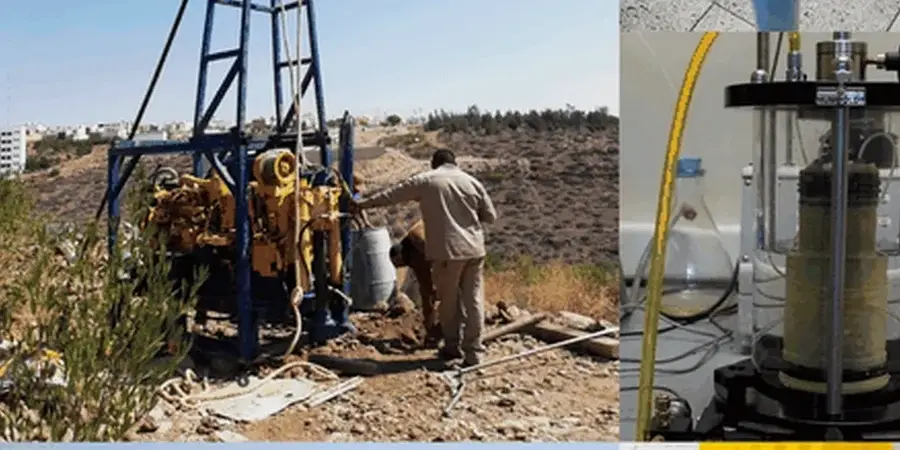
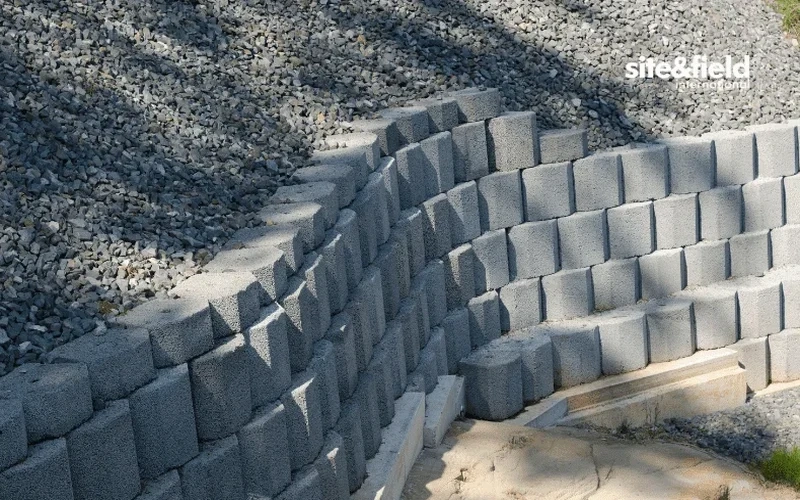
The red Permian clay that shapes Oklahoma City's landscape is a different beast from the soils you'll find in Tulsa or Dallas. It swells when it gets wet and shrinks hard during our dry summer stretches, creating a lateral earth pressure profile that generic wall designs just can't handle. A retaining wall here isn't a catalog pick—it has to be tuned to the actual plasticity of the soil behind it. Our lab runs the Atterberg limits and direct shear tests that feed into the wall geometry, and when the site sits over one of the city's buried stream channels, we often pair the design with a test pit investigation to map exactly where the stiff clay transitions into softer alluvium before a single bucket of excavation starts.
A retaining wall in Oklahoma City fails from the back side first—if the drainage can't keep up with a spring downpour, no amount of steel saves the stem.