GEOTECHNICAL ENGINEERING
OKLAHOMA CITY
HomeLaboratoryTriaxial test

Triaxial Testing in Oklahoma City — Shear Strength & Soil Behavior

Evidence-based design. Reliable delivery.

LEARN MORE

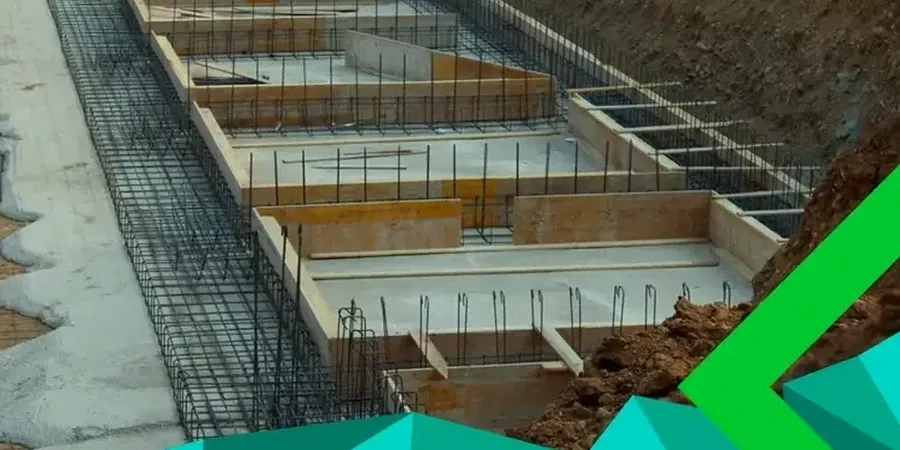
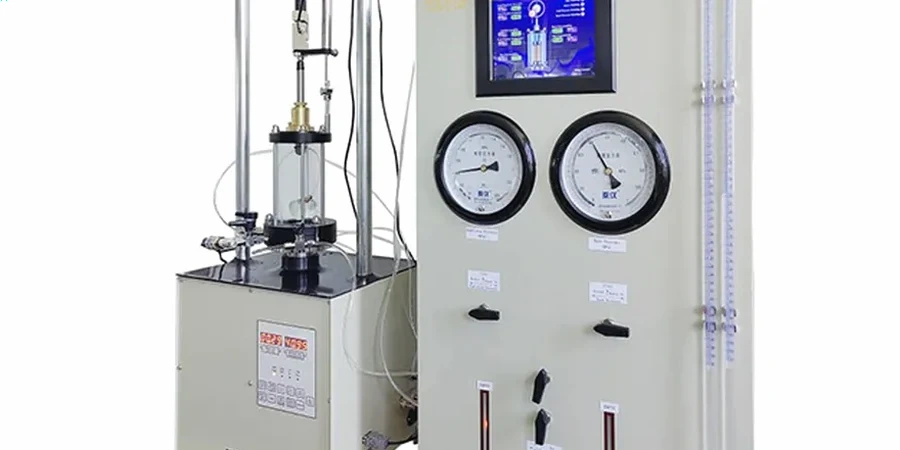
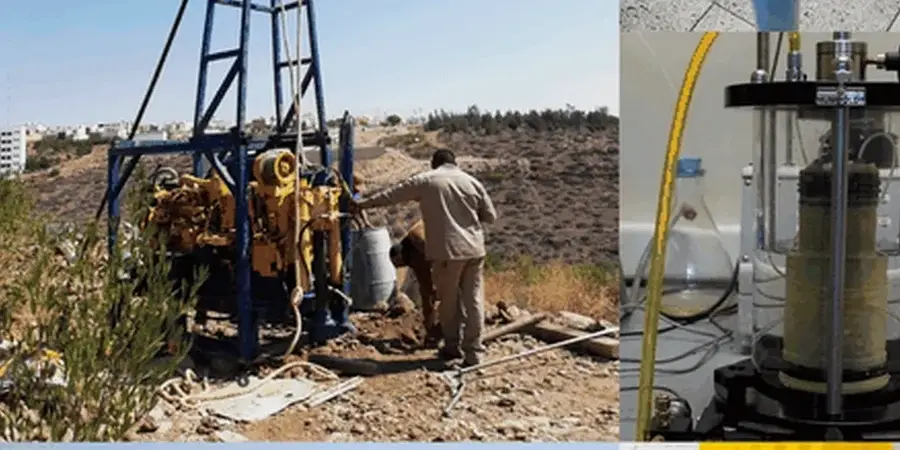
The Permian red-bed shales and Quaternary alluvial deposits beneath Oklahoma City create highly variable foundation conditions that demand precise strength parameters. With groundwater often perched within 15 feet of the surface in the North Canadian River floodplain, effective stress analysis becomes critical for any deep excavation or embankment design. A triaxial test on undisturbed Shelby tube samples provides the drained and undrained shear strength data that standard penetration testing cannot deliver. When the Oklahoma County claystone weathers rapidly upon exposure, knowing the true effective cohesion intercept prevents overdesign of retaining structures. Our laboratory runs consolidated-undrained and consolidated-drained triaxial tests following ASTM D4767 and D7181, giving the geotechnical parameters needed for projects from the Innovation District to the expanding suburbs of Edmond and Moore.

Effective stress strength parameters from a triaxial test often reduce foundation costs by 15-20% compared to conservative total stress assumptions for Oklahoma City clays.
Our service areas

Process and scope

Oklahoma City’s climate swings from prolonged summer drought to intense spring storm events, and these moisture cycles directly affect the strength of local soils. A saturated lean clay behind a retaining wall behaves very differently than the same material at optimum moisture content. The triaxial test captures this behavior by shearing specimens under controlled drainage conditions, producing the effective friction angle and cohesion that govern slope stability calculations. For projects near the Oklahoma River or in areas with expansive Port series clays, we often combine the triaxial test with a grain size analysis to correlate fines content with drained strength, and integrate Atterberg limits to confirm the plasticity range expected during wetting-drying cycles. Our triaxial cells accommodate specimens up to 2.8 inches in diameter, allowing testing of gravelly clays common in the basal terrace deposits without scalping the coarse fraction.
Triaxial Testing in Oklahoma City — Shear Strength & Soil Behavior
Technical reference — Oklahoma City

Local geotechnical context

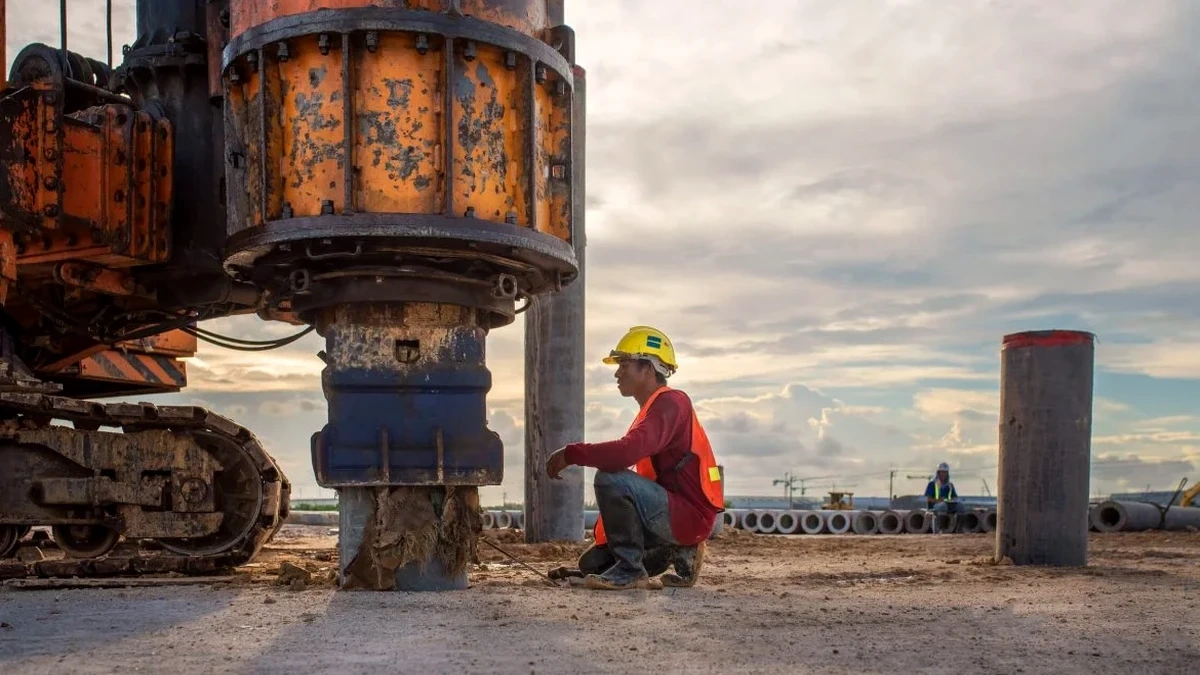
A recurring mistake in Oklahoma City deep foundation projects is designing piles based on unconfined compression tests alone, which overestimates clay strength by ignoring pore pressure buildup during shearing. When a triaxial consolidated-undrained test with pore pressure measurement is omitted, the resulting design can underestimate pile settlement by 30-40%, especially in the normally consolidated alluvium south of the Oklahoma River. The IBC and ASCE 7 require site-specific shear strength for any structure in Seismic Design Category C or higher, which covers most of Oklahoma County. Relying on published correlations without a triaxial test puts the engineer at professional risk and the owner at financial risk if foundations underperform during the 100-year flood event combined with seismic loading from the Nemaha Ridge fault system.

Need a geotechnical assessment?

Reply within 24h.

Email: contact@geotechnical-engineering.xyz

Applicable standards

ASTM D4767: Consolidated-Undrained Triaxial Compression Test on Cohesive Soils, ASTM D7181: Consolidated-Drained Triaxial Compression Test on Soils, IBC Chapter 18: Soils and Foundations, ASCE 7-22: Minimum Seismic Loads

Technical parameters

ParameterTypical value
Test StandardASTM D4767 / D7181
Specimen Size2.8 in (71 mm) diameter
Loading StageStrain-controlled, 0.5-2% per minute
Saturation MethodBack-pressure saturation, min B-value 0.95
Consolidation TypeIsotropic or anisotropic K0
Drainage ConditionsCU, CD, UU per project spec
Data OutputMohr circles, c', φ', stress path, E50

Common questions

How many specimens are needed for a complete triaxial test program?

A standard triaxial test series requires three specimens sheared at different confining pressures to construct a Mohr-Coulomb failure envelope. For Oklahoma City projects, we typically recommend obtaining a minimum of two undisturbed Shelby tubes from the critical stratum to allow for trimming and backup specimens.

What is the cost of a triaxial test in Oklahoma City?

A triaxial test program with three specimens typically ranges from US$1,750 to US$2,890, depending on whether consolidated-drained or consolidated-undrained conditions are specified and the confining stress levels required for the project depth.

How does the triaxial test differ from a direct shear test for Oklahoma City soils?

The triaxial test controls drainage and measures pore water pressure throughout shearing, which is essential for the saturated alluvial clays found in Oklahoma City. Direct shear forces failure on a predetermined plane and cannot capture the true effective stress path, often underestimating the friction angle by 2-4 degrees in local overconsolidated deposits.

When should a CU test be specified instead of a CD test?

Consolidated-Undrained testing applies when evaluating short-term stability conditions, such as an open excavation in Oklahoma City during the rainy season or rapid loading of a foundation immediately after construction. Consolidated-Drained testing governs long-term conditions where excess pore pressures have fully dissipated, which is the typical case for permanent retaining walls and cut slopes.

Location and service area

We serve projects in Oklahoma City and surrounding areas. More info.

View larger map