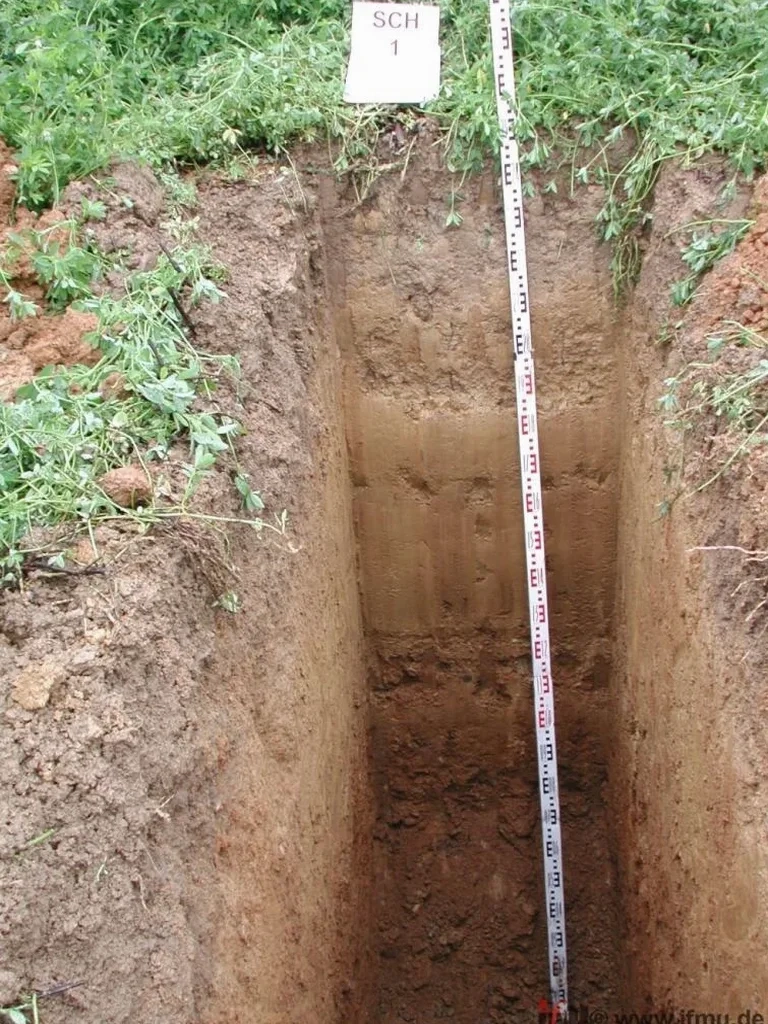
IBC Chapter 18 and ASTM D2487 set the baseline for subsurface exploration, but Oklahoma City’s geology demands more than a cursory check. The local stratigraphy shifts abruptly from Permian red-bed claystone to Quaternary alluvial deposits along the North Canadian River, a transition that can undermine shallow footings if not mapped correctly. An exploratory test pit provides direct access to these strata—visual logging of moisture seams, desiccation cracks, and gravel lenses that SPT blow counts alone can miss. On commercial sites near the I-35 corridor, we’ve opened pits to 14 feet through stiff, overconsolidated clay only to find a thin saturated silt layer at depth, a condition that triggered a redesign from spread footings to a mat foundation solution. When the soil profile changes every half-mile, seeing the strata with your own eyes remains the most reliable QA check in the book.
A 14-foot test pit in Oklahoma City’s alluvial corridor revealed a saturated silt seam that changed the foundation design from spread footings to a mat slab.